Indice
In 2026, WhatsApp is no longer considered a messaging app as it once was; it has become one of the primary channels for customer support, both for businesses and customers of all sizes. With over 2 billion active users worldwide, customer support through this app has become a necessity.
However, doing so without the right tool can often lead to problems such as disorganized conversations, very slow and delayed responses, lack of follow-up, lost messages, and a poor and inconsistent customer experience. Blocking or even spam issues could also occur.
Precisely for this reason, more and more companies are deciding to adopt specialized tools for customer support on WhatsApp and other messaging apps, allowing them to work collaboratively, automate processes, measure their results, and scale without ever sacrificing quality.
In today's article, we want to show you the 6 best tools for customer support on WhatsApp in 2026.
Before listing the best customer support tools on WhatsApp, it is essential to understand why WhatsApp should never be treated solely like a traditional app when it comes to professional customer support.
There is one simple reason: WhatsApp was not designed for this specific purpose, and its capabilities are limited in terms of offerings and features that can facilitate and improve customer service through the platform. This is precisely why we need tools that allow us to:
-
Respond faster with automations and pre-saved replies
-
Measure response times and the quality of service provided
-
Avoid human errors and duplicate messages
-
Increase support without ever losing personalization
Now, we can move on to the list of the 6 best CRMs for WhatsApp in 2026.

Callbell is a leading platform in both Europe and Latin America for WhatsApp customer support, especially for businesses requiring multichannel solutions and collaborative customer service.
This app is a CRM for instant messaging apps that allows you to simultaneously manage and control WhatsApp across multiple channels, including Instagram, Facebook, Telegram, and Callbell-branded live chat. All from a single, unified inbox optimized for customer support, sales, and call center teams. They receive hundreds of conversations every day and require a tool capable of offering specific features to improve customer service, control, and the performance of salespeople, agents, and administrators.
You may have questions, such as what are the main features Callbell offers within its platform? Here are some:
-
Shared inbox for all teams.
-
Automatic chat assignment.
-
Tags and funnels to classify customers.
-
Chatbots and automations without the need for any programming.
-
Response time, performance analytics, and more.
-
Integration with the official WhatsApp API.
-
Compatibility with WhatsApp Coexistence (use the WhatsApp Business app and the API simultaneously)
-
Cross-platform integration via Zapier
Who can use Callbell?
Now, we want to talk about what's really important. We know that as a business, you would like to know if Callbell is the right solution for you. The answer is yes, as it is a tool that works very well for medium-sized and large businesses that receive a large number of messages daily via WhatsApp and other social media.
Companies looking for simpler, easier-to-implement solutions that significantly improve their communication processes are ideal for:
-
Companies with support and sales teams.
-
Companies that receive a high volume of requests daily.
-
Companies that want true multi-channel customer service.
Callbell is an easy-to-use and highly intuitive tool, allowing most companies to easily and quickly adapt to their processes.
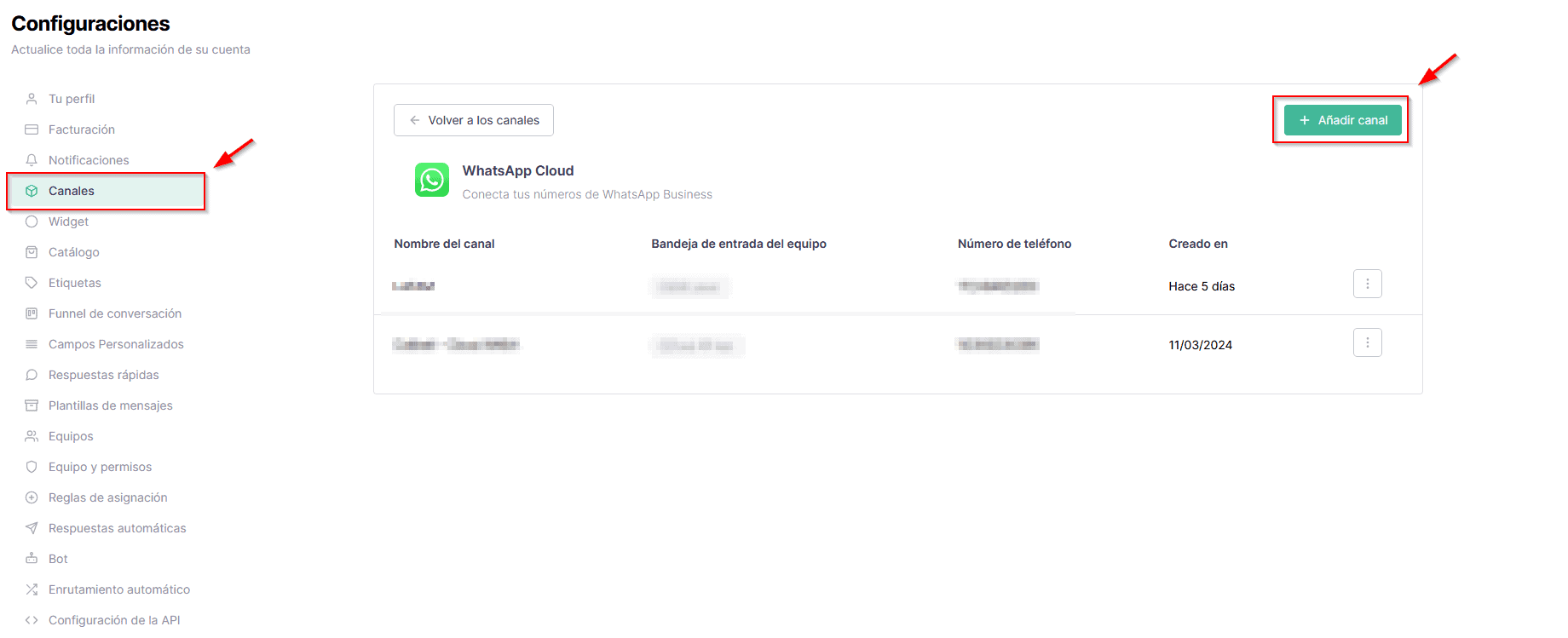

Zendesk is a cloud platform specifically designed for customer service and CRM. It is designed to monitor and manage all customer interactions from a single location, allowing companies to offer more efficient and organized service.
Among its multiple communication channels, live chat and email certainly stand out, where Zendesk excels at managing message volumes through its ticketing system.
The tool's key features include:
-
Multichannel support
-
Ticket management
-
Automation and AI
-
Scalability and customization
-
CRM and analytics
It is crucial to note that the tool is used by over 100,000 companies worldwide to improve customer service efficiency and build customer loyalty through a seamless and intuitive experience.
Who can use Zendesk?
It is ideal for medium-sized and large companies that handle a high volume of messages daily. However, it is not a tool that specializes in messaging. Its channels are more common, and the ticketing system is different from real-time messaging. Therefore, if your business depends on the speed of real-time messaging, this may not be the perfect solution for your needs.

Wati is a comprehensive solution that integrates various communication channels and messaging apps. It was designed to help all businesses communicate with their customers quickly and effectively. It is perfect for small and medium-sized businesses looking to manage internal communications, automate sales and support, and get more from WhatsApp without relying solely on the standard app.
However, we know you have questions and would like to discover all of Wati's key features, so here are a few:
-
Centralized management of all chats: Allows multiple agents to access and respond to messages from a unified inbox, without having to switch between accounts.
-
Automations and chatbots: Includes automatic replies, customizable chatbots, and workflows to qualify leads.
-
Scalability for marketing, sales, and support: Wati offers features to acquire and convert leads, manage sales, and provide customer support through automatic replies and follow-up tools.
-
Integrations and APIs: Supports integration with other systems and CRMs.
-
Global access and user loyalty: Used by thousands of businesses in various countries around the world to expand WhatsApp's reach.
In conclusion, we can say that Wati is an excellent alternative to the previous options, but it is somewhat expensive and complex to use.

For years, Salesforce has been one of the most widely used and recognized CRMs worldwide, featuring an extremely powerful cloud platform capable of helping companies manage their entire customer relationships from a single, integrated system.
Unlike other apps, Salesforce is a comprehensive suite of tools designed to manage and control all aspects of a company's marketing, including sales, customer service, and data analysis.
What really makes Salesforce special:
- The ability to unify teams and data on a
single platform
Salesforce allows different departments, sales,
marketing, customer service, and e-commerce to
view and use the same, up-to-date customer
information in real time.
- Management of the entire customer interaction
lifecycle
From lead generation to follow-up, from closing
the sale to ongoing support, Salesforce offers
tools that automate key processes, helping
increase productivity.
- A cloud platform with built-in artificial
intelligence
Being cloud-based, Salesforce guarantees
centralized access from any device,
anywhere.
- Highly customizable and scalable
Salesforce is not a “standard CRM.” Its
flexibility and system allow it to adapt to
specific needs, integrating with other tools and
growing with the company.
In short, Salesforce is a tool designed for large companies that want to centralize all marketing control in one place and manage all the actions needed to grow their business from there. If your company is large and receives numerous messages daily, Salesforce is the ideal solution for you.

Zoho CRM is a highly versatile customer relationship management (CRM) platform that can help any business organize, automate, and streamline sales and customer management processes within a single system.
Unlike simpler CRMs, Zoho offers a robust ecosystem that includes not only contact and sales management, but also marketing campaigns, workflow automation, advanced analytics, and lead management.
It is certainly a competitive CRM, very similar to Salesforce, focusing not only on communications but also on marketing and control for any company using this type of tool.
One of its main advantages is customization and scalability: modules, automations, and tools can be configured based on the way your team works and the company's growth.
Furthermore, it is worth considering that this tool offers different plans dedicated to its users: however, the tool is very complex to configure, slow to implement, and requires staff training.
Overall, Zoho is a fairly comprehensive and powerful CRM, capable of focusing on business automation, management, and tracking. It is not a communications-focused CRM and can integrate with WhatsApp via an external connection. Therefore, if your business focuses solely on communication and agent management, Zoho's support and sales management solution is not the ideal solution for you.

This tool focuses primarily on conversational marketing, i.e., communication via WhatsApp and other instant messaging apps and is designed for businesses that primarily sell via platforms like WhatsApp, Instagram, Facebook Messenger, and Telegram.
One of Kommo's most interesting features is that each contact can be transformed into a sales opportunity directly in a visual, CRM-like pipeline, where all users can move elements along the lead based on its current status.
One of this tool's main strengths is its deep integration with messaging channels, particularly WhatsApp via API. This allows teams to respond quickly, automating follow-ups and keeping all chats connected to a single lead, even when multiple agents are involved.
Kommo also includes:
-
Sales workflow automation (responses, lead assignment, reminders)
-
Visual pipeline management
-
Sales performance reporting
-
Integrations with external tools (forms, landing pages, e-commerce)
Kommo is suitable for all small to medium-sized sales teams working with a high volume of incoming leads and needing to convert chats in a structured way. The only major drawback is that it is quite expensive, complex, and difficult to understand, which can slow down implementation and require demonstrations and explanations of how it works.
After analyzing all these CRMs capable of integrating, managing and automating WhatsApp chats, it is clear that there is no single tool that is “one size fits all.” There are solutions that excel at meeting the specific needs of each type of customer, and it's crucial to remember that every business is different. The type and business model can vary dramatically from one company to another.
Precisely for this reason, Callbell represents the best overall option for almost any business implementing WhatsApp as a communication channel.
Why?
-
Unified multichannel customer service
-
Ease of teamwork
-
Simple yet powerful automations
-
Focus on sales and customer service
-
Accessibility even for small teams and scalability for medium-sized ones
Additionally, it is worth highlighting the tool's multilingual support for all its customers. Want to try it free for 14 days? Click here!
![964aef37cbd523c1a8d2250157bf3829?s=100&d=mm&r=g - Broadcast list on WhatsApp, what is it? [Complete Guide 2023]](https://secure.gravatar.com/avatar/964aef37cbd523c1a8d2250157bf3829?s=100&d=mm&r=g "Broadcast list on WhatsApp, what is it? [Complete Guide 2023]")
About the author: Hello! I am Alan and I am the marketing manager at Callbell, the first communication platform designed to help sales and support teams to collaborate and communicate with customers through direct messaging applications such as WhatsApp, Messenger, Telegram and Instagram Direct